
September is Women in Medicine month and I wanted to highlight what is like to be a woman in medicine in 2022. Women have transformed the medical field worldwide despite facing numerous challenges. The number of female health professionals has increased over the past several decades. Women adopt roles and positions in various health settings, including:
- Hospitals
- Clinics
- Outpatient facilities
- Surgical centers
- Educational institutions
- Medical Spas
While women make substantial efforts to streamline healthcare, they continue to experience various challenges. According to the United States Bureau of Labor Statistics, the county has more than 78% female individuals in the medical field. Ethan Nkana is a physician contract negotiator with Rocky Mountain Physician Agency. He said he is seeing “male physicians make 15-25% more than women in the United States.”
VOX highlights that 93% of women and 7% of men are nurses in the United States. While men represent a small number of nurses in the U.S, they have higher salaries or make more money than their female counterparts.
The article shows that male nurses earn an average of $5,148 more than female health professionals. Today’s article will discuss the challenges faced by women in medicine and recommendations to improve their status. Read on!
What are the Challenges Facing Women in Medicine Today?
“Being a woman in medicine can feel normal or like the minority, depending on the situation. In medical school, about half my classmates were women. However, some fields, such as anesthesiology and interventional pain management, are still male-dominated. Soon being a woman in medicine will hopefully be just as likely as being a man in medicine.” – Dr. Pollard
Women experience a wide range of challenges in medicine. Unlike male professionals, females experience gender discrimination, biases, career advancement challenges, low average salaries, etc. Let us discuss the primary problems facing women in medicine in 2022.
Lower Salaries than Male Professionals
The American Association of Medical Colleges highlights that men receive/get higher salaries than women, doctors/physicians, and nurses, even if they have similar demographics or workplaces.
According to Clinical Advisor, female physician assistants have 10% lower salaries than male professionals. A 2017 research study published by the National Institute of Health shows male nurse practitioners earn $7,000 more than female nurses.
Underrepresentation of Woman physician in leadership
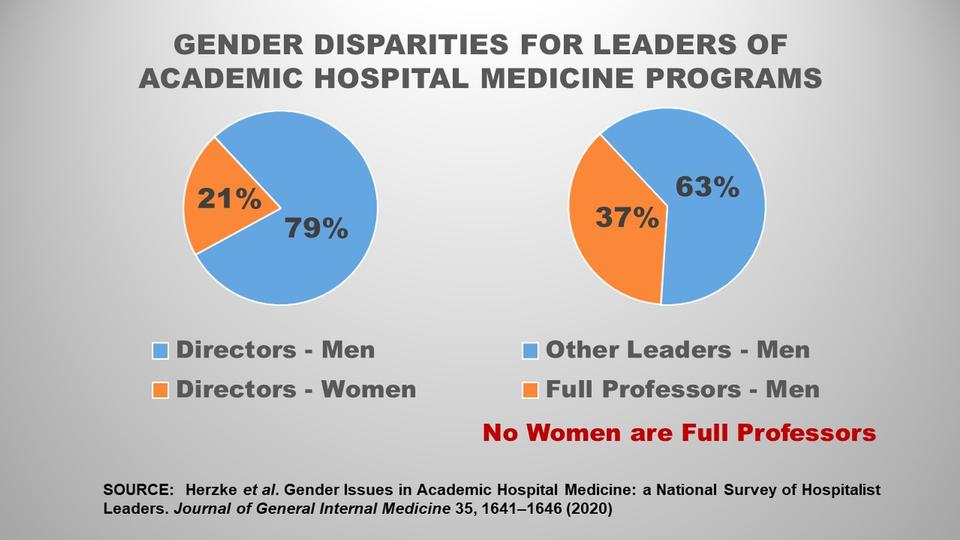
The underrepresentation of female health professionals in the medical sector is one of the most challenging situations to overcome for authorities. Research shows that female health providers find it challenging to adopt leadership role, especially in the academic world. See here for more information.
However, women physicians in leadership can perform better than their male counterparts. Not only are females less interested in leadership roles, but authorities/institutions also undermine them for key positions due to their feminine characteristics.
Gender-Based Discrimination
A 2021 study published in the Journal of Hospital Medicine highlights that female medical professionals experience gender-based discrimination and sexual harassment at the workplace, preventing them from streamlining their on-duty responsibilities.
For instance, male patients pass inhumane remarks, touch female doctors and nurses on different body parts, and try humiliating them. A 2022 systematic review study shows that 27% of women working as surgical residents experience sexual harassment from their male counterparts and patients.
Pregnancy Stigma
A 2020 research study published on NCBI concludes that pregnancy or giving birth to a child has become a stigma in the United States, particularly in health settings. For instance, women physicians or nurses who return to work after childbirth are defamed with gender discrimination, body shaming, and lower productivity.
Although female professionals may experience complications after childbirth, they rarely affect a woman’s productivity levels. Women make significant efforts to resume their duties and fulfill their responsibilities efficiently, adequately, and professionally.
Recommendations for Achieving Physician Gender Equity
Although more and more female individuals enter the medical field, male professionals are still the leaders. So, this takes a massive toll on women’s physical, mental, emotional, and social wellbeing.
According to Vivian, 43% of American nurses left their jobs during the Covid-19 pandemic. However, this was when the health sector needed more nurses to reduce the burden on hospitals, clinics, and relevant facilities.
While the health sector can’t afford to lose qualified, experienced, and skilled female workers, gender inequity, discrimination, and sexual harassment are the primary reasons that cause women to leave their jobs.
Bear in mind that overcoming gender inequity is not an overnight job. In other words, it is a marathon, not a sprint. Therefore, institutions, hospitals, clinics, and authorities must develop sophisticated policies to overcome these challenges. Here are a few recommendations to achieve physician gender equity in medicine.
Making Systemic Changes
Comprehensive policies or strategies to mitigate the potential risks of physician gender equity in medicine require hospitals and clinics to recognize the systemic nature of female discrimination in the workplace.
For example, authorities must encourage women to report critical issues in the workplace. Likewise, they must promote women physicians to adopt leadership roles in health settings and collaborate with male leadership to develop role modeling equity principles.
Once developed, men and women physicians can strengthen and promote equity, diversity, mutual respect, inclusion, professionalism, and collegiality in different organizational policies. Authorities can address inequalities by defining clear goals/objectives and explaining how to achieve those plans.
In addition, in collaboration with women physicians, the hospital administration can develop transparent policies for whistleblowers and encourage them to report unpleasant situations/events.
Perform thorough research and find evidence-based information to address female problems in the workplace, such as sexual harassment, mental health issues, burnout, gender biases, and inappropriate behavior.
However, this requires you to develop competencies among the administrative team to identify the underlying cause of the issue before addressing it. Moreover, implement gender-inclusive language in various processes, including:
- Shortlisting for interviews
- Recruitment and hiring
- Professional/safe environment
- Equal salaries, grants, and funding
- Equity in job evaluation and feedback
As a hospital administrator, you can ask the board of directors to create training opportunities for men and women physicians and promote awareness of gender impartiality and sexual equity.
For example, conduct quarterly or bi-annual seminars, meetings, and training sessions and provide the trainees with evidence-based information. It will help females to act as whistleblowers and adequately report harassment or related event to the concerned authorities. So, the authorities will take action and ensure justice is served.
Ensuring Career Flexibility
Career flexibility is the right of every individual working in the medical field. Whether male or female, hospitals and clinics must provide equal opportunities for health professionals to streamline or advance their careers.
Authorities must create career-life plans and coaching facilities/sessions for women physicians and nurses to meet their life and career goals. The policies you make must be flexible and family-friendly for both male and female health workers.
Implement non-gendered parental leave programs, shorten workdays, and develop policies that prevent the hospital staff from sending emails or messages to female workers in the evening or weekend.
Promoting Female Representation
Because female health workers are victims of gender discrimination and biases, particularly in managerial and leadership roles, hospitals should focus on increasing visibility and recognition for women and encourage skilled females to represent the organization in leadership roles.
However, this requires developing a leadership program, career advancement planning, role model availability, and a centralized system to strengthen identity compatibility and promote a sense of belonging within the organization.
Besides, create opportunities for female health workers in various domains, including development, growth, mentorship, grants, sponsorships, rewards, and incentives.
How have Things Changed or Improved for Women in Medicine?
Women in the medical field have experienced discrimination and inequity for many years. However, the healthcare sector underwent significant changes in the 1970s. The development and implementation of the Equal Opportunity Act enabled females to enroll in healthcare institutions.
The number of female health professionals, including doctors, physicians, and nurses, increased by 310% by 1990. The American Medical Association (AMA) reports that over 50% of students who enrolled in medical institutions between 2019 and 2020 were females.
According to the Association of American Colleges, female physicians accounted for more than 36% workforce in the U.S health sector in 2019-2020. Besides, females adopted distinct roles, including nurse practitioners and physician assistants, which grew during the last decade.
Statistical Data shows that 15,000 women were working as nurses in the United States in 2019. At the same time, there were more than 100,000 female physician assistants in 2020.
However, female health professionals follow a different medical practice or approach than their male counterparts. For instance, women health professionals interact more with patients, create a pleasant work environment, and focus on balancing work and life.
In addition, female healthcare providers usually work in primary care, geriatrics, and pediatrics. Not only are female professionals more diligent, but they can also appropriately manage patients with complex issues.
Remember, women as physicians and nurses tend to see fewer patients, but at the same time, they address more complaints per visit and focus on improving family history and psychosocial problems.
Moreover, a 2018 study highlights that woman follows a different medical approach to streamline healthcare delivery in the primary setting. That’s why more female physicians and nurses work in primary care settings.
Similarly, seniors who receive care from female health providers experience lower hospital admission and mortality rates, leading to higher patient satisfaction. However, men working as administrators in hospitals and clinics consider women inefficient, less productive, and unprofitable.
Thus, these issues prevent women from adopting leadership roles. Most female workers lose career advancement and promotion opportunities. We recommend developing and adopting new evaluation criteria based on impartiality and equality to ensure a sense of inclusion, flexibility, diversity, and respect.
The purpose is to provide women with opportunities to leverage career advancements and promotions and receive recognition and compensation for the value they provide to the healthcare sector.
The Importance of Women Supporting Women in Medicine
Female workers who have striven to survive gender discrimination, sexual harassment, and unequal opportunities for development and growth must come forward and support newcomers.
Experienced female physicians must support newcomers in medicine via mentorship, coaching, and volunteer support to help them become more productive and streamline health delivery for patients.
In addition, women supporting women within the organization can lead to a healthy work-life balance. Experienced female doctors and nurses can provide residents/new professionals with support and guidance to help them avoid gender-based discrimination and systemic biases within the medical setting. As Dr. McCabe says, “Most of my female freinds are physicians. It helps to have someone to talk through hard things like trying to balance all of the demands of job, wife and mother.”
For example, suppose one female physician is pregnant and can’t perform her duty for a few hours due to abdominal cramps. In that case, another female doctor should stay in the hospital or clinic for a few more hours to help her colleague. Job sharing is an excellent way to reduce the burden.
In addition, women supporting women in medicine leads to higher job satisfaction rates, creates a sense of community/friendship, ensures organizational dedication, and strengthens more meaningful work.
Frequently Asked Questions (FAQs)
How hard will a woman’s life be if she is a doctor?
Although female physicians or doctors can enjoy high salaries (still less than their male counterparts), they endure a massive burden of home/family duties (we women call it “Mom guilt”) and discrimination in the workplace.
These are the two primary problems working women, particularly female doctors, experience in the United States. These take a massive toll on a doctor’s physical and mental health, leading to issues like stress, burnout, and depression.
However, women supporting women within the health organization via job sharing or just having each other to talk to can reduce the burden/ stress. At the same time, organizations must provide administrative support, avoid contacting female professionals in the evening or during off-days and accommodate them in the best possible way to mitigate the risk of burnout and stress. There are many female physicians who are balancing it all and extremely happy.
What are the best medical field careers for females?
Although the best medical field career varies from woman to woman, dentistry is one of the best careers for females because it provides them with flexible job hours. It enables females to balance their work and life while focusing on self-care. Dental practices usually do not follow the standard 9-5 job hours, making it more family-friendly and giving them peace of mind.
Other healthcare industries women like going into are physicians, registered nurses, medical sales representatives, and pharmaceutical sales representatives.
What gender is mainly in the medical field?
According to Washington Post, an increasing number of female physicians, doctors, and nurses work in hospitals, clinics, and other medical facilities. However, men still dominate health organizations with 64% workforce compared to 36% women.




0 Comments